Wednesday, May 1, 2019

Now Showing...

Steele Brook on its way to the Battenkill


     Finally.
     Spring.
     Washington County at its green, flowering best. Time to get outside. To hike and bike. Maybe find some busy water and absorb its energy. So then, why am I writing to tell you about several indoor city events?
    Because they are well worth your time. In fact, they may encourage you to get outside, to renew your relationship with places special to you. Here's a look at two exhibits and a screening in Glens Falls.

At the Hyde Museum...


     Jacob Houston is a young Greenwich artist who has been garnering attention locally and regionally. Now he has a solo exhibit at the venerable Hyde Museum on Warren Street in Glens Falls. Houston uses acrylics to create crisp, vibrant images. He's noted for his cityscapes, including New York, San Francisco, London, Venice and others. His birdseye view of Paris's Notre Dame Cathedral is drawing lot's of attention. It's a sobering reminder of what was lost in the recent fire.
     A painting of Africa almost jumps off the wall with its striking color. It seems to capture an entire continent within its frame. And toasting marshmallows over a campfire is given an imaginative twist in 'Witchcraft Lake'. Whimsey and tiny details are part of the pleasure of Houston's work.
     For Washington County enthusiasts there are paintings of Greenwich, Cambridge and the Battenkill, as well as images from nearby Vermont. His art reminds me a little of Grandma Moses but with his own unique style. When visiting the exhibit be sure to read the guest comment book. It's sprinkled with words like "playful", "magical", "joy" and "fresh and luminous". Leaving the gallery I felt like I was in one of the paintings, floating above a serene, inviting world. Jacob Houston's art is that uplifting. 
     More on Houston and the Hyde. 


Jacob Houston -web image


At LARAC... 


     Another collaboration between Washington County artists and a Glens Falls gallery is on view at the Lower Adirondack Regional Arts Council, located on City Park next to Crandall Library. Paige Henry, Michael Scupholm and Sam Rathbun are all associated with the Salem Art Works and this exhibit may serve as an impetus to visit the repurposed farm. It's a fascinating place and climbing Cary Hill with its sculpture park and mountain views is a unique experience. At LARAC you'll see works in iron, bronze and glass as well as assemblages and installations.
     More on SAW and LARAC. 


The view from Cary Hill
  

At the Wood Theater... 

     Finally, on Saturday, May 4 at 3:00pm The River and the Wall will be shown at the Wood Theater on Glen Street. It goes without saying that the southern border between the U.S. and Mexico has been in the news. We all have our own opinion on whether there's a crisis there. But how did we come to our conclusions? Obviously, there are those with a big soapbox who try to bully us with their take on the problem and their solution.


Texas - Mexico border - web image

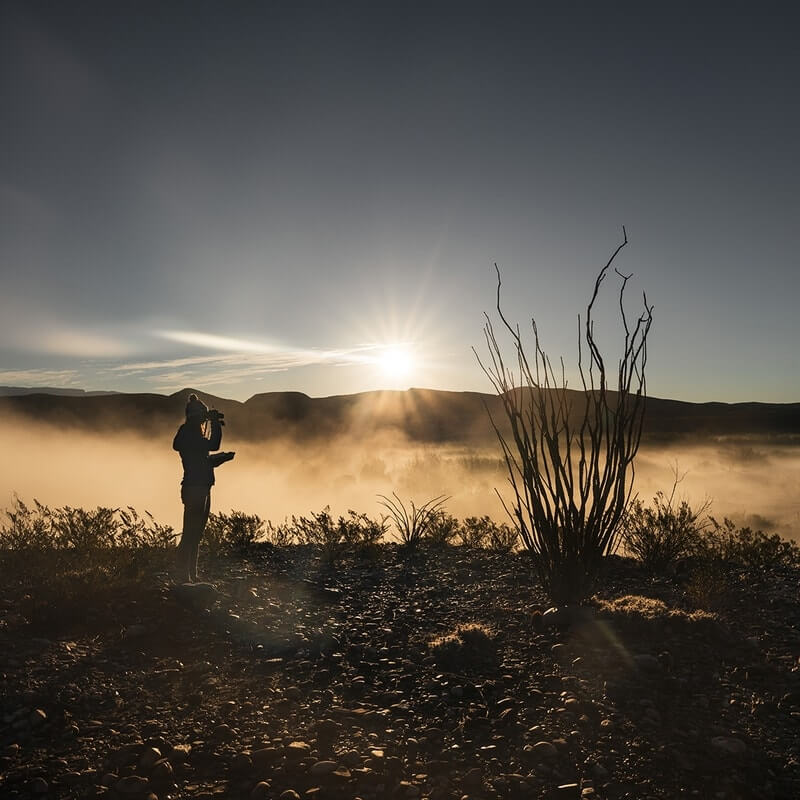
     When I want to know a place, a place in Washington County for example, I'll read about it, talk to people with first hand knowledge and then go and visit. Spend as much time there as possible, letting the land gradually reveal itself. That's what five adventurers did along the Rio Grande between Texas and Mexico. Over two and a half months they traveled 1200 miles on horseback, mountain bike and canoe. They met with people from both sides of the border and both sides of the issue. They immersed themselves in the place and then they made a documentary about their experience. 


web image

     As important as the film is to the ongoing national discussion, I'm guessing that Heather Mackey will be the big draw at the Glens Falls event. She grew up locally, excelling in academics and athletics before going on to Cornell for a degree in biology. Heather then continued her education out west, doing field research in several far-flung and remote places, including Big Bend in south Texas. Her expertise in the area's wildlife and ecology led to an invitation to join The River and the Wall trip.


The River and the Wall gang - Heather is the pretty one - web image

     I've known Heather since before the beginning. Her parents, Steve and Licia, are long time friends of Gwenne and myself. We met thru a mutual love of the Adirondacks and have had many adventures together over the years. By far the best adventure has been watching the girls, their Heather and our Holly, grow up to become accomplished young women.


web image

     Your run-of-the-mill academic ornithologist might find 1200 miles of wilderness travel a little...daunting. Not Heather. She grew up hiking, biking, paddling and skiing. The Adirondack High Peaks were her backyard playground and she's been notching such difficult challenges as the Range-in-a-day (many miles, much climbing) since an early age. She and her dad have pedaled across the country twice - west to east on road bikes and north to south on mountain bikes. I remember her doing the Lake Lauderdale Triathlon years ago and there have been many marathons and ultra-distance trail races since.
     So, over a thousand miles of harsh desert and remote river canyons? No problem for Heather Mackey. But she did mention one bit of real suffering. She'd never spent much time riding horses. Those first hours in the saddle...man was her butt sore! 
     More on The River and the Wall and the Wood Theater.   


Sunday, April 14, 2019

Swamp Story

     I went for a walk not too long ago. In front of a white house I found someone's misplaced 'To do' list. It read: 

        - Make America great again
        - Build a wall
        - Drain the swamp

     Uh-oh! I kind of like swamps just the way they are. Better get out there and enjoy one right now. Before the emergency draining begins.
     That's how one cold winter's afternoon found me wandering around Eldridge Swamp over beyond Cambridge. It had been close to ten below in the morning. That's what I call swamp weather. It's what you need to turn open water and boot-sucking muck into a frozen, walkable surface. To everything there is a season...


     Washington County has lots of swamps but Eldridge is a publicly owned State Forest and it's accessible. That makes it my 'go to'. There would certainly be more to see in summer but also more mosquitos, ticks and mud. Which is not to say that conditions were perfect for my visit. 


     The first challenge was parking. There are three places along Rt. 313 where you can leave your vehicle to access Eldridge. At least there is most of the year. In winter that number can drop to zero. But I was driving a Toyota 4x4 truck and feeling a little cocky, so I plowed thru a small snowbank and skidded down to the summer parking lot. Now snow covered ice is easy enough to go down but what about coming up and out? Too late to worry about that now. Besides, the swamp was waiting. Time to explore. 
     The walking wasn't all I'd hoped for either. There was a breakable crust with an inch of powder snow on top. It might have been good skiing but maneuverability becomes an issue when you're bushwhacking thru shrubby cover. Snowshoes were another option but they were back home in the garage. I decided to go with just boots and did posthole a bit. It was a little tedious but doable.


Where are they when you need them?

     Even by mid-afternoon it was still frigid. I had intended to do some plant identification, using field guides and taking notes. But that was clearly out of the question. Just taking my gloves off to snap a few photos left my fingers with that tingly feeling. As the saying goes, "It's the next life where everything is perfect." With winter 'swamping' you take what you can get.


     Ecologists divide and subdivide wetlands. In the book    Wetland, Woodland, Wildland - A Guide to the Natural Communities of Vermont they list at least 40 different types.  Water level, vegetation type and position in the landscape differentiate. Eldridge is large enough to have a variety of habitats. Leaving the parking lot I walked across a field that was dry enough to have been farmed in the past. An old logging road then lead into a mixed forest stand of pine, hemlock and hardwoods. It was low and level but didn't seem excessively wet. Then a slight drop of a foot or two  transitioned into more of a scrubby, small tree and shrub habitat with alders, red maple and elm. 


     I wandered out thru this brushy area noting various tracks in the snow with rabbit and coyote prevalent. It was open enough to get good views of Snake Ridge, the Shushan hills and the higher mountains of Vermont to the east. The quiet was striking - an almost complete stillness.


     Eventually I could see some open water with what appeared to be a railroad grade on the other side. I believe this was a slough that empties into the Battenkill River but it was now late afternoon of a cold winter's day. Time to turn around and follow my tracks back the way I'd came. 


     Before leaving I stopped to examine the catkins of an alder. I must have stood too long in one spot. In almost comical slow motion the icy crust gave way and I sunk into water just over the top of my boot. This introduced a small note of urgency to getting back to the truck.  Heading out, I swear I heard a chuckling voice say "I'm a swamp. What did you expect?"
     As I retraced my route the only sound was the crunch of boots on snow, with maybe a little sloosh from the water I'd taken on! But then I thought I heard a voice. The voice of the swamp. It was as if the ice had been broken (literally and figuratively) between Eldridge and myself. This place wanted to tell its story if only I would listen.


     Turns out the swamp had already spoken to better listeners than myself. Geologists, botanists and ecologists have all visited and pieced together a history of the area. Since my winter outing I've been looking into what they've learned. Hopefully I'll get to share some of the swamp's story in a future post. 


EXIT STRATEGY

     Kame deposits form steep banks on the south side of Eldridge. From the S bend on Rt. 313 an old farm lane drops down the slope to an overgrown field. This is now used as access to the section of State Forest between 313 and the Battenkill. It works fine in summer, not so good in winter. 


The access lane from a previous 'no problem' visit

     Exercise caution before driving down here when conditions are 'iffy'. I wish I had. When it was time to come out all I could do was put her in four-wheel drive, get a running start and aim for the top of the snowy/icy hill. First, the truck fishtailed towards a deep ditch that separates the lane from the highway. That was good for a little shot of adrenaline. Thankfully it straightened but then began to lose traction. Just when things were beginning to look dire one wheel pushed thru the snowbank at the top and caught dry pavement. Out we popped and before reaching Cambridge merciful heat was blowing on my needy toes. All's well that ends warm...